BREAKING
· Governor announces emergency infrastructure funding for Alaska
· Senate Passes Sweeping Economic Reform Bill in Historic Bipartisan Vote
· Federal Reserve Signals Possible Rate Pause as Inflation Cools
· Governor Declares Emergency, Unlocks $2.3B for Alaska
· Supreme Court Agrees to Hear Landmark Immigration Case This Fall
· DOJ Opens New Antitrust Investigation Into Three Major Tech Platforms
· NATO Leaders Agree on Expanded Eastern Flank Deployment at Brussels
· Celtics Stage Historic Comeback in Game 7 to Advance to Conference
· Governor announces emergency infrastructure funding for Alaska
· Senate Passes Sweeping Economic Reform Bill in Historic Bipartisan Vote
· Federal Reserve Signals Possible Rate Pause as Inflation Cools
· Governor Declares Emergency, Unlocks $2.3B for Alaska
· Supreme Court Agrees to Hear Landmark Immigration Case This Fall
· DOJ Opens New Antitrust Investigation Into Three Major Tech Platforms
· NATO Leaders Agree on Expanded Eastern Flank Deployment at Brussels
· Celtics Stage Historic Comeback in Game 7 to Advance to Conference

BREAKING
· Governor announces emergency infrastructure funding for Alaska
· Senate Passes Sweeping Economic Reform Bill in Historic Bipartisan Vote
· Federal Reserve Signals Possible Rate Pause as Inflation Cools
· Governor Declares Emergency, Unlocks $2.3B for Alaska
· Supreme Court Agrees to Hear Landmark Immigration Case This Fall
· DOJ Opens New Antitrust Investigation Into Three Major Tech Platforms
· NATO Leaders Agree on Expanded Eastern Flank Deployment at Brussels
· Celtics Stage Historic Comeback in Game 7 to Advance to Conference
· Governor announces emergency infrastructure funding for Alaska
· Senate Passes Sweeping Economic Reform Bill in Historic Bipartisan Vote
· Federal Reserve Signals Possible Rate Pause as Inflation Cools
· Governor Declares Emergency, Unlocks $2.3B for Alaska
· Supreme Court Agrees to Hear Landmark Immigration Case This Fall
· DOJ Opens New Antitrust Investigation Into Three Major Tech Platforms
· NATO Leaders Agree on Expanded Eastern Flank Deployment at Brussels
· Celtics Stage Historic Comeback in Game 7 to Advance to Conference
Home
Politics
Supreme Court sharply limits use of race in redistrict....
Supreme Court sharply limits use of race in redistricting in a win for Republicans
The court agreed with Republicans that the congressional map Louisiana drew is a racial gerrymander, making it harder for civil rights plaintiffs to challenge future maps.
By Lawrence Hurley
Reporter
June 2, 2025
5 mins read
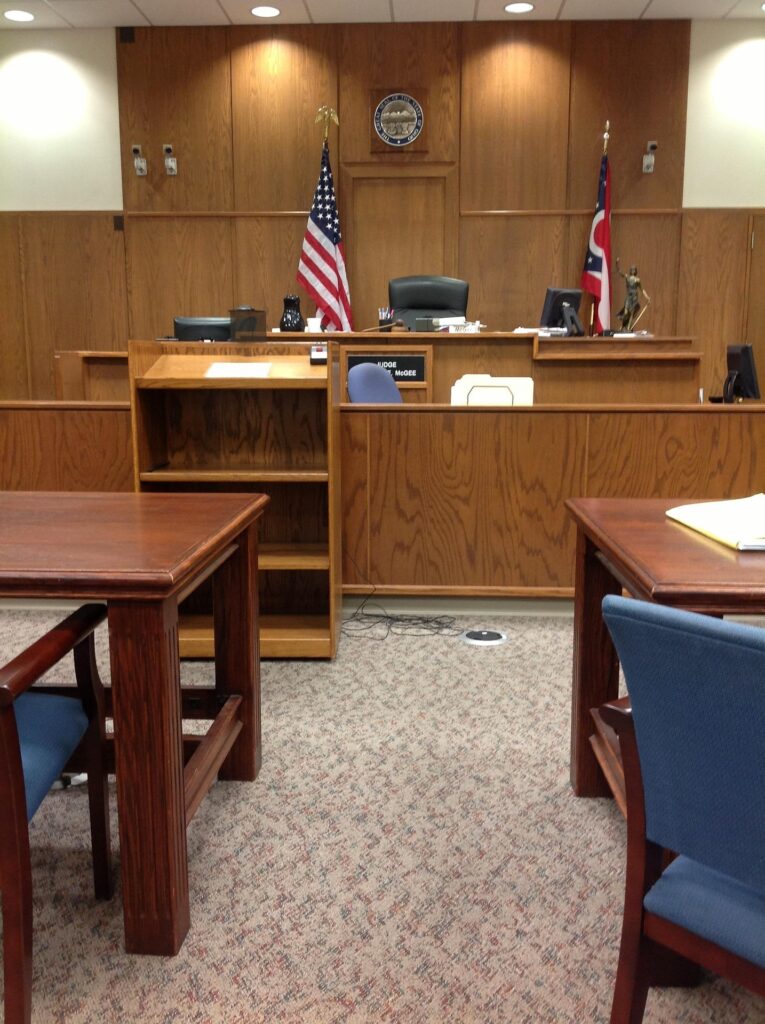
WASHINGTON — The Supreme Court on Wednesday further weakened the Voting Rights Act, ruling that a congressional map in Louisiana was a racial gerrymander even though it was drawn to comply with the landmark law aimed at protecting minority voters.
The justices, split 6-3 with the court's conservatives in the majority, told states they can almost never consider race when drawing maps to comply with Section 2 of the Voting Rights Act, which was enacted to protect minority voters who long faced discrimination in elections.
Conservative Justice Samuel Alito, writing for the majority, said that while there may be extreme situations where the use of race can be justified to draw a map, no such conditions existed in the Louisiana case. As a result, the new map was an "unconstitutional racial gerrymander," he added.
The decision means Louisiana will need to redraw its map. Other states could try to do so as well, although there is little time this year with primaries underway ahead of November’s midterm congressional elections. Louisiana's primary is May 16, just two weeks away.
Longer term, the ruling could lead to fewer minority-majority districts not just in Congress but also in state and local government, reducing the number of non-white elected officials.
While the court had previously assumed that states could consider race in seeking to comply with the Voting Rights Act, Alito wrote that "allowing race to play any part in government decision-making represents a departure from the constitutional rule that applies in almost any other context."
In justifying the court's change of course, Alito highlighted developments in recent years, including "social change" in the South, where most of the race-based redistricting challenges arise. He also cited the court's 2019 decision that paved the way to unfettered partisan gerrymandering.
As a result, when civil rights plaintiffs challenge newly-drawn maps, the state can argue as a defense that it was merely seeking to maximize partisan advantage. In the South in particular, party preference is often aligned with race, with most Black people voting for Democrats.
In a separate concurring opinion, conservative Justice Clarence Thomas, a longtime critic of the Voting Rights Act, said the ruling should "largely put an end" to a system that he saw as unlawfully dividing people into districts based on race.
The three liberal justices dissented, with Justice Elena Kagan writing that the "consequences are likely to be far-reaching and grave and that the ruling effectively "renders Section 2 all but a dead letter."
"Under the court’s new view of Section 2, a state can, without legal consequence, systematically dilute minority citizens’ voting power," Kagan said.
In interviews, voting rights advocates characterized the ruling as the end of redistricting cases under Section 2, arguing they will be impossible to win.
Vinícius told reporters after the game that Prestianni directed a racial slur at him, which Prestianni denied. Prestianni wrote on Instagram that "at no time" did he direct racist insults Vinícius and that Vinícius "regrettably misunderstood what he thought he heard."
Kylian Mbappé backed his Real Madrid teammate in interviews and said he heard Prestianni call Vinícius a "monkey."
"He said it five times," Mbappé said. "I am speaking as clearly as possible. I am telling you what I think and what I heard, and I heard it very well."
Prestianni denied the claim, ESPN reported, telling officials of UEFA, the governing body of soccer in Europe, that he used an anti-gay slur, not a racist slur. Prestianni was initially suspended for one game while officials investigated.
Last week, UEFA announced Prestianni would be punished with a six-game suspension specifically for homophobic discrimination. The penalty for racist abuse is a 10-game suspension.
The dispute sparked international headlines and condemnation across the soccer world. Many felt that leagues should impose rules against players trying to obscure what they say in arguments.
FIFA President Gianni Infantino supported the idea that a player should be sent off the field in such cases if there is a question of racist abuse. He added in an interview with Sky News that he didn't understand why someone would try to hide.
He told Sky that FIFA was proposing a change to the rules about the matter for rules board's meeting this month.
"There must be a presumption that he has said something he shouldn't have said, otherwise he wouldn't have had to cover his mouth," Infantino said.

LOCAL
Anchorage Assembly votes to ban feeding eagles, and other wildlife, Tuesday
Whether it is illegal to feed eagles, a nationally protected species, has always been a bit of a gray ....
By L. Maxwell and J. Pike
5 mins read
Most read
5
Daily Briefing
Top headlines delivered every morning.
You have subscribed successfully!
Stay Updated with Anchorage News
Receive breaking news, daily briefings, and special reports — delivered to your inbox.
You have subscribed successfully!