BREAKING
· Governor announces emergency infrastructure funding for Alaska
· Senate Passes Sweeping Economic Reform Bill in Historic Bipartisan Vote
· Federal Reserve Signals Possible Rate Pause as Inflation Cools
· Governor Declares Emergency, Unlocks $2.3B for Alaska
· Supreme Court Agrees to Hear Landmark Immigration Case This Fall
· DOJ Opens New Antitrust Investigation Into Three Major Tech Platforms
· NATO Leaders Agree on Expanded Eastern Flank Deployment at Brussels
· Celtics Stage Historic Comeback in Game 7 to Advance to Conference
· Governor announces emergency infrastructure funding for Alaska
· Senate Passes Sweeping Economic Reform Bill in Historic Bipartisan Vote
· Federal Reserve Signals Possible Rate Pause as Inflation Cools
· Governor Declares Emergency, Unlocks $2.3B for Alaska
· Supreme Court Agrees to Hear Landmark Immigration Case This Fall
· DOJ Opens New Antitrust Investigation Into Three Major Tech Platforms
· NATO Leaders Agree on Expanded Eastern Flank Deployment at Brussels
· Celtics Stage Historic Comeback in Game 7 to Advance to Conference

BREAKING
· Governor announces emergency infrastructure funding for Alaska
· Senate Passes Sweeping Economic Reform Bill in Historic Bipartisan Vote
· Federal Reserve Signals Possible Rate Pause as Inflation Cools
· Governor Declares Emergency, Unlocks $2.3B for Alaska
· Supreme Court Agrees to Hear Landmark Immigration Case This Fall
· DOJ Opens New Antitrust Investigation Into Three Major Tech Platforms
· NATO Leaders Agree on Expanded Eastern Flank Deployment at Brussels
· Celtics Stage Historic Comeback in Game 7 to Advance to Conference
· Governor announces emergency infrastructure funding for Alaska
· Senate Passes Sweeping Economic Reform Bill in Historic Bipartisan Vote
· Federal Reserve Signals Possible Rate Pause as Inflation Cools
· Governor Declares Emergency, Unlocks $2.3B for Alaska
· Supreme Court Agrees to Hear Landmark Immigration Case This Fall
· DOJ Opens New Antitrust Investigation Into Three Major Tech Platforms
· NATO Leaders Agree on Expanded Eastern Flank Deployment at Brussels
· Celtics Stage Historic Comeback in Game 7 to Advance to Conference
Home
U.S News
Trump says he doesn't need congressional authorizi....
Trump says he doesn't need congressional authorization for military operations in Iran, citing ceasefire
Trump told reporters he considers seeking congressional authorization under the War Powers Act "unconstitutional" and falsely claimed other presidents had not done so.
By M. Alba and A. Marquez
Reporter
May 1, 2026
5 mins read
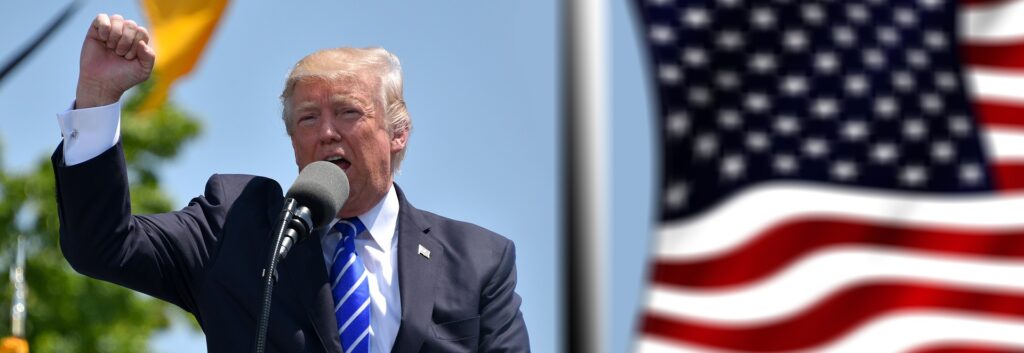
President Donald Trump on Friday sent letters to Congress explaining that, due to the ceasefire, he doesn't need its authorization for military operations in Iran, even though the conflict hit the 60-day mark this week.
"On April 7, 2026, I ordered a two-week ceasefire. The ceasefire has since been extended. There has been no exchange of fire between the United States Forces and Iran since April 7, 2026. The hostilities that began on February 28, 2026, have terminated," Trump wrote in the letters, one of which went to the House and one of which went to the Senate.
"Despite the success of United States operations against the Iranian regime and continued efforts to secure a lasting peace, the threat posed by Iran to the United States and our Armed Forces remains significant," the president added in the letter, promising to keep congressional leaders updated on further developments in Iran.
The letters come as congressional leaders this week faced mounting questions about whether they planned to schedule votes on a formal war authorization from Congress.
The 1973 War Powers Resolution directs the president to seek authorization for war from Congress after an ongoing military conflict hits the 60-day threshold. The law allows for a president to seek a 30-day extension if necessary to safely remove troops from the region, but Trump did not mention that in his letter.
"I have and will continue to direct United States Armed Forces consistent with my responsibilities and pursuant to my constitutional authority to conduct United States foreign relations and as Commander in Chief and Chief Executive," the president wrote in his letter.
The U.S. military strikes on Iran officially began on Feb. 28, but the Trump administration notified Congress of the conflict on March 2, starting the 60-day clock then.
A temporary ceasefire went into effect on April 8 to allow the U.S. and Iran room to negotiate an end to the war and to reopen the Strait of Hormuz, but talks have not produced results.
Iran has blocked traffic in the Strait. The U.S. has a naval blockade of the Iranian ports and is using more than 100 fighter and surveillance aircraft, two carrier strike groups, and more than one dozen ships to enforce the blockade. A Navy destroyer fired on and hit an Iranian-flagged cargo that attempted to move through the blockade.
As he departed the White House on Friday heading to Florida, the president also told reporters that he wasn't seeking authorization from Congress, "because it’s never been sought before."
"There’s been numerous, many, many times, and nobody’s ever gotten it before. They consider it totally unconstitutional, but we’re always in touch with Congress, but nobody’s ever sought it before. Nobody’s ever asked for it before. It’s never been used before. Why should we be different?" he said in response to NBC News.
In the past, other presidents have also argued that they don't need congressional authorization for certain military engagements.
In 2011, then-President Barack Obama argued against seeking congressional approval for a military operation in Libya, with his administration saying, "U.S. operations do not involve sustained fighting or active exchanges of fire with hostile forces, nor do they involve U.S. ground troops."
But then-Presidents George W. Bush in 2001 and 2002 and George H.W. Bush in 1991 did seek congressional authorization for military conflicts in the Middle East and in those cases, lawmakers approved their requests.
Congress last year repealed the 2002 and 1991 authorizations for use of military force as part of the Pentagon's annual spending package.
On Thursday, House Speaker Mike Johnson, R-La., argued that Congress wouldn't have to formally weigh in on the military conflict with Iran, telling NBC News, "we're not at war."
Johnson made a similar point to Trump's argument about the ceasefire, saying, "I don’t think we have an active, kinetic military bombing, firing or anything like that. Right now, we are trying to broker a peace."
Later Thursday, in a hearing before the Senate Armed Services Committee, Defense Secretary Pete Hegseth also dismissed the 60-day threshold, telling lawmakers, "I would defer to the White House and White House counsel on that. However, we are in a ceasefire right now, which, our understanding, means the 60-day clock pauses or stops in a ceasefire."
Vinícius told reporters after the game that Prestianni directed a racial slur at him, which Prestianni denied. Prestianni wrote on Instagram that "at no time" did he direct racist insults Vinícius and that Vinícius "regrettably misunderstood what he thought he heard."
Kylian Mbappé backed his Real Madrid teammate in interviews and said he heard Prestianni call Vinícius a "monkey."
"He said it five times," Mbappé said. "I am speaking as clearly as possible. I am telling you what I think and what I heard, and I heard it very well."
Prestianni denied the claim, ESPN reported, telling officials of UEFA, the governing body of soccer in Europe, that he used an anti-gay slur, not a racist slur. Prestianni was initially suspended for one game while officials investigated.
Last week, UEFA announced Prestianni would be punished with a six-game suspension specifically for homophobic discrimination. The penalty for racist abuse is a 10-game suspension.
The dispute sparked international headlines and condemnation across the soccer world. Many felt that leagues should impose rules against players trying to obscure what they say in arguments.
FIFA President Gianni Infantino supported the idea that a player should be sent off the field in such cases if there is a question of racist abuse. He added in an interview with Sky News that he didn't understand why someone would try to hide.
He told Sky that FIFA was proposing a change to the rules about the matter for rules board's meeting this month.
"There must be a presumption that he has said something he shouldn't have said, otherwise he wouldn't have had to cover his mouth," Infantino said.
U.S. NEWS
Senate Passes Sweeping Economic Reform Bill in Historic Bipartisan Vote
Lawmakers from both sides of the aisle united Thursday to pass the most significant ....
By Margaret Chen
5 mins read
Most read
5
Daily Briefing
Top headlines delivered every morning.
You have subscribed successfully!
Stay Updated with Anchorage News
Receive breaking news, daily briefings, and special reports — delivered to your inbox.
You have subscribed successfully!